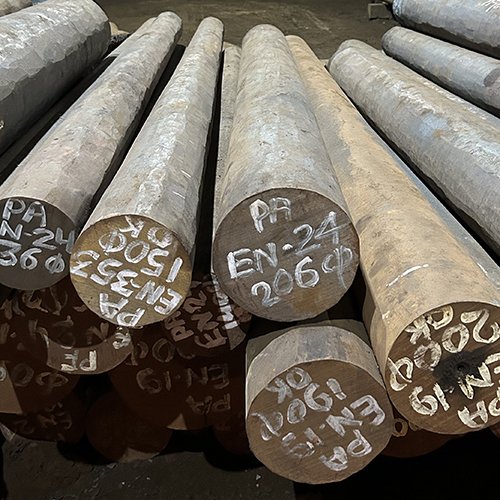
Forging Die DesignTool & Die Design in ForgingForging Equipment and ToolingEnvironmental Impact of Forging Inspection Methods in Forging In a forging plant, raw material inspection entails checking materials to ensure they meet defined standards and requirements before use in the forging process. This involves evaluating their physical, chemical, and mechanical properties, and confirming compliance with relevant industry specifications. Raw Material Verification Visual Inspection Chemical Composition Analysis Mechanical Properties Testing Nondestructive Testing Metallurgical Testing Visual Inspection Visual inspection is the first and one of the most critical steps in the inspection process of raw materials before they enter the forging stage. This initial inspection involves a careful and thorough visual examination of the surface and general condition of raw materials such as metal bars, rods, billets, or ingots. The purpose of this inspection is to detect any obvious issues or visible defects that could compromise the integrity of the forging process or the quality of the final product. During visual inspection, trained personnel or quality inspectors closely observe the raw materials for problems such as cracks, rust, or corrosion. Cracks are serious defects that can severely weaken the material, leading to failures during or after forging. Rust and corrosion not only lower the material’s strength but also affect its structural reliability and forgeability. The inspection process also includes checking for surface defects such as dents, scratches, pits, folds, or any physical damage that might have occurred during storage, transportation, or earlier handling operations. These surface flaws can create stress concentrations or uneven material flow during forging, which may result in poor-quality forged parts. A crucial part of the visual inspection is ensuring the raw material is clean and free from any contaminants. Inspectors look for the presence of oil, grease, dirt, paint, or other foreign substances. If these contaminants are not removed before forging, they can interfere with heat transfer, cause surface imperfections, or even lead to forging defects. Inspectors also perform a dimensional inspection to verify that the raw material conforms to the required size, shape, and specifications as per production plans. Using incorrectly sized or shaped material can lead to dimensional nonconformity in forged parts or inefficient forging operations. Although visual inspection may appear to be a basic quality control step, it is an essential part of the overall inspection and quality assurance system. By identifying and eliminating substandard material early, visual inspection helps prevent downstream issues, minimizes rework, and improves product consistency. It supports high-quality standards and enhances efficiency across the entire forging process. What is Checked in the Visual Inspection? Cracks Rust or Corrosion Surface Defects Cleanliness Shape and Size Why Visual Inspection Important? Prevents defective material from entering production. Saves time and cost by reducing scrap and rework. Helps maintain consistent quality in the final forged parts. Ensures safety and reliability, especially in critical applications (e.g., automotive, aerospace). Chemical Composition Analysis What is the Purpose of Chemical composition Analysis? Chemical composition inspection is a critical part of the overall inspection process and plays a key role in quality control for raw materials received at a forging plant. This type of inspection ensures that the material’s elemental composition matches the required chemical specifications for its intended forging application. The strength, durability, hardness, corrosion resistance, and overall performance of the final forged product are directly influenced by the accuracy of this chemical inspection. The primary objective of this chemical composition inspection is to verify that the material grade provided by the supplier aligns with recognized standards, such as ASTM, DIN, JIS, or IS specifications. This inspection targets both major alloying elements—like carbon, manganese, chromium, molybdenum, and nickel—and trace or residual elements, including potentially harmful impurities such as sulfur and phosphorus. Major elements determine critical mechanical properties like tensile strength, toughness, and heat resistance. The inspection also ensures that impurity levels remain within acceptable limits to prevent brittleness, cracking, or poor forgeability. Multiple techniques are employed for this chemical inspection, each chosen based on accuracy needs and material type: Optical Emission Spectroscopy (OES) is one of the most widely used methods for rapid and precise inspection of metallic samples. It works by sparking the sample and analyzing the emitted light to determine the elemental composition. Wet chemical analysis, though more time-intensive, is sometimes used for in-depth inspection or to verify OES results for critical components. Positive Material Identification (PMI) devices are also employed, particularly in the receiving area, for quick, on-site inspection of alloy types and verification of material certificates. This inspection step is carried out before the raw material is accepted into production. It serves as a gatekeeper to prevent non-conforming or substandard materials from proceeding to the forging process. Without proper chemical composition inspection, there is a risk of producing defective or non-compliant forged products, which can lead to mechanical failure, customer rejections, or safety issues. The process begins with collecting a representative sample from the raw material, either by cutting a small piece or using a test coupon if provided by the supplier. The sample surface is carefully prepared by grinding or polishing to remove any rust, oil, or scale, which can interfere with accurate readings. After the test is performed, the results are recorded and compared to the material specification provided in the purchase order or technical standards. It is also common practice to verify the material’s Mill Test Certificate (MTC) received from the supplier, comparing its data with in-house test results to confirm consistency and compliance. This step is particularly important in industries where component performance and safety are critical, such as aerospace, automotive, oil and gas, and heavy machinery. If the raw material does not meet the required chemical composition, it can lead to serious defects in the final forged part, resulting in costly rework, delays, or even field failures. Performing thorough chemical analysis not only ensures the material’s suitability for forging but also supports traceability, documentation, and compliance with customer and industry requirements. What is Analyzed? Main Elements: Elements like Carbon (C), Manganese (Mn), Chromium (Cr), Nickel (Ni), Molybdenum (Mo), etc., depending